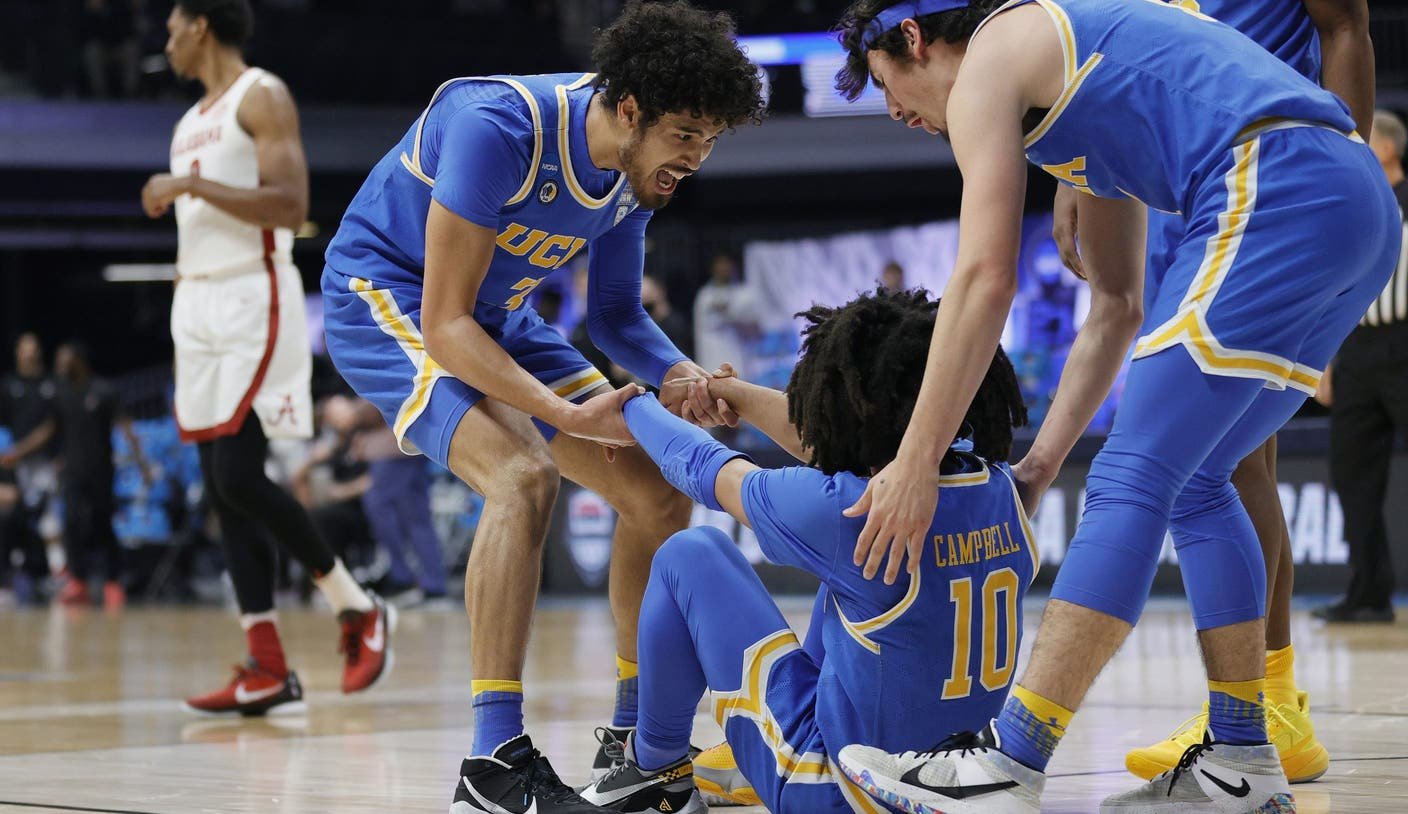
It’s the most wonderful time of year, as the NCAA Men’s Basketball Tournament, affectionately known as “March Madness” to most, starts this week.
This will be the 87th edition of the Tournament and the 41st since expanding to 64 teams in 1985. Given the numerous upsets over the years, FOX Sports Research took a deep dive into the numbers to find you the best first-round and tournament betting trends.
We dissected how teams performed against the spread (ATS) and straight up (SU) to give you the information needed to make some successful wagers throughout the first week.
Let’s dive in.
This page may contain affiliate links to legal sports betting partners. If you sign up or place a wager, FOX Sports may be compensated. Read more about Sports Betting on FOX Sports.
Underdogs have slight edge against the spread (ATS) in Round of 64
If it feels like underdogs have done well in the first round in recent years, it’s because they have — especially from a gambling perspective. Since 2015, they’ve gone a whopping 162-152-3 ATS (51.6%). Eighty-five of those underdogs actually won their respective games straight up (SU), which is significant considering the number of mid-majors and small programs that compete.
Below, we’ve outlined how underdogs have performed historically since the tournament expanded to 64 teams in 1985:
- Underdogs are 623-614-25 ATS (50.4%) and 318-944 SU (25.2%) in the Round of 64 all-time.
- Double-digit underdogs are 249-252-7 ATS (49.7%) and 38-470 SU (7.5%) in the Round of 64 all-time.
- Currently, the 20-plus point spreads in the Round of 64 feature Duke (-27.5) vs Siena, Illinois (-24.5) vs UPenn, Gonzaga (-20.5) vs Kennesaw State, Houston (-23.5) vs Idaho, Arizona (-30.5) vs LIU, Iowa State (-24.5) vs Tennessee State, Purdue (-25.5) vs Queens NC, and UConn (-20.5) vs Furman.
- Teams that are 20-plus point underdogs in the Round of 64 are 94-87-3 ATS (51.9%) and 4-180 SU (2.2%).
- Teams that are 30-plus point underdogs in the Round of 64 are 10-15 ATS (40%) and 0-25 SU.
Partido entre cabezas de serie específicas y cabezas de serie de octavos de final
Ampliando un poco la primera ronda, aquí hay un desglose de algunas tendencias interesantes con semillas de dos dígitos. Quizás se sorprenda del éxito que han tenido las semillas inferiores en los últimos años:
- A 12-seed has won 57 first-round games since the field expanded to 64 teams in 1985.
- In 12 of the past 17 tournaments, at least one 13-seed has beaten a 4-seed.
- In six of the past 13 tournaments, a 14-seed has beaten a 3-seed; however, only two 14 seeds have defeated a 3-seed in the last six tournaments (2021 Abilene Christian defeated Texas; 2024 Oakland defeated Kentucky).
- In six of the past 13 NCAA Tournaments, a 15-seed has beaten a 2-seed, but none won last year.
- Double-digit seeds are 539-558-22 ATS (49.1%) and 250-869 SU (22.3%) in the Round of 64 since 1985.Excludes the Oregon–VCU game in 2021 when Oregon advanced due to COVID-19 issues.
- Excludes the Oregon–VCU game in 2021 when Oregon advanced due to COVID-19 issues.
Dicho esto, sería injusto no señalar algunas de las obvias rachas de derrotas que tienen muchas conferencias pequeñas, ya que estas son las escuelas que normalmente logran estas semillas de dos dígitos.
- Horizon League schools are 1-12 in the Round of 64 since 2012, with the lone win in that span coming from Oakland against Kentucky in 2024.14-seed Wright State, the lone Horizon League team in this year’s Tournament, faces Virginia, the 3-seed in the Midwest Region.
- 14-seed Wright State, the lone Horizon League team in this year’s Tournament, faces Virginia, the 3-seed in the Midwest Region.
- Big Sky schools are 3-36 in the Round of 64 all-time, with the last win coming from Montana in 2006.Idaho is this year’s lone Big Sky representative, and will take 2-seed Houston in the South Region.
- Idaho is this year’s lone Big Sky representative, and will take 2-seed Houston in the South Region.
- Coastal Athletic schools are 0-12 in the Round of 64 since 2013, with the last win coming from VCU (now in the Atlantic 10) in 2012.The 13-seed Hofsta Pride are the lone CAA team in the field this year, facing 4-seed Alabama.
- The 13-seed Hofsta Pride are the lone CAA team in the field this year, facing 4-seed Alabama.
- Big South schools are 1-29 in the Round of 64, with the lone win coming from Winthrop in 2007.The lone Big South school in this year’s tournament is 12-seed High Point, which takes on 5-seed Wisconsin.
- The lone Big South school in this year’s tournament is 12-seed High Point, which takes on 5-seed Wisconsin.
Apuesta por estos entrenadores para pasar a octavos de final
Se puede argumentar que el entrenamiento es más importante en el baloncesto universitario que en cualquier otro deporte, y ese concepto se enfatiza aún más durante el Tour. Hay seis entrenadores en la liga de este año que se ubican entre los 20 mejores de todos los tiempos en porcentaje de cobertura para los octavos de final (mínimo 10 partidos dirigidos en la ronda):
- Matt Painter: 13-4 ATS (76.5%) in the Round of 64, the best cover rate of any coach all-time. No. 2 Purdue takes on Queens NC.
- Bill Self: 14-10-1 ATS (58.3%) in the Round of 64, 16th all-time. The 4-seed Jayhawks will take on 13-seed Cal Baptist as 14.5-point favorites.
- Tom Izzo: 15-11 ATS (57.7%) in the Round of 64, 17th best among all coaches all-time. The Spartans are in their 28th consecutive NCAA Tournament under Izzo, which is the longest active streak in D-I. They are a 3-seed and 16.5-point favorites against 14-seed North Dakota State.
El cabeza de serie No. 1 dominó los octavos de final y en el partido por el título.
Mientras nos centramos en los octavos de final, también queríamos ofrecerles una breve descripción general de las características que mostraron los campeones nacionales.
Desde que comenzó la siembra en 1979, 28 cabezas de serie No. 1 han ganado 27 títulos nacionales, la mayor cantidad que cualquier cabeza de serie. Los cabezas de serie restantes combinados solo ganaron 18 títulos. Eso significa que el 60% de los campeones nacionales desde 1979 han sido los primeros favoritos. De hecho, 7 de los últimos 8 campeones nacionales y 14 de los últimos 18 campeones han sido cabezas de serie número uno.
En la Ronda de 64, fueron casi perfectos, registrando un récord de 158-2 SU (98,9%) y 83-75-2 ATS (52,5%) desde 1985. Los únicos 16 cabezas de serie que vencieron a un máximo favorito fueron UMBCha derribado Virginia en el Torneo 2018 y David Dickinson el equipo esta abajo Purdue en 2023.
Otras tendencias notables
- Since the First Four was introduced in 2011, a team that won in the First Four has made it to the Round of 32 in 12 of those 14 Tournaments, including two teams to make the Final Four (2021 VCU, 2024 UCLA).
- Rick Barnes is appearing in his 30th NCAA Tournament; in the previous 29, his teams lost in the first weekend (Round of 64 or Round of 32) 19 times.
- Dan Hurley is 17-3 ATS (85%) and 15-5 SU (75%) in the NCAA Tournament as a head coach; that is the highest cover rate of any coach since 1985 (minimum 15 games coached).
- Since 1985, a double-digit seed has made the Sweet 16 in all but two NCAA Tournaments (1995, 2007).
- No team west of the state of Texas has won the NCAA Tournament since 1997, when Arizona took home the title that year.
Tendencia KenPom
KenPom se ha convertido en una de las herramientas de análisis del baloncesto universitario más respetadas desde su lanzamiento. El sitio toma en cuenta una variedad de métricas para medir la efectividad ofensiva y defensiva de cada equipo de baloncesto de la División I. Al observar los datos de KenPom previos al torneo, se observan algunas tendencias interesantes.
Primero, 23 de los últimos 24 campeones nacionales se ubicaron entre los 21 primeros en eficiencia ofensiva ajustada (2014 Universidad de Connecticut la única excepción). 21 de los últimos 24 campeones nacionales se ubicaron entre los 31 primeros en eficiencia defensiva ajustada (2009 Carolina del Norte, 2015 Duke, 2021 Baylor).
Entonces, utilizando las clasificaciones KenPom previas al torneo de 2026, aquí hay ocho equipos que encajan en las clasificaciones entre los 21 primeros en ofensiva y los 31 primeros en defensa, con probabilidades proporcionadas por DraftKings Sportsbook (al 18 de marzo):
Duque: +350 (apuesta $10 para ganar $45 en total)
Michigan: +370 (apuesta $10 para ganar $47 en total)
Arizona: +380 (apuesta $10 para ganar un total de $48)
Florida: +750 (apuesta $10 para ganar $85 en total)
Estado de Iowa: +1800 (apuesta $10 para ganar $190 en total)
Illinois: +2200 (apuesta $10 para ganar $230 en total)
Vanderbilt: +7500 (apuesta $10 para ganar $760 en total)
luisville: +15000 (apuesta $10 para ganar $1,510 en total)
Nuevamente, esta no es una medida estricta, ya que los equipos pueden ponerse de mal genio, como algunos de los equipos mencionados entre paréntesis arriba. Pero es un buen indicador de qué equipos vale la pena apostar por el título antes de que comience el Tour.
Duke es actualmente el favorito para ganarlo todo (+350), pero vale la pena señalar que 10 de los últimos 12 ganadores del título tenían probabilidades superiores a +450 al ingresar al Torneo (el equipo de Florida del año pasado tenía +325 antes de la primera ronda). Y antes de eso, Kentucky en 2012 fue el último equipo en tener probabilidades más bajas, terminando en +185 antes del primer juego.
Vale la pena señalar que los 24 campeones nacionales de la era KenPom (desde 2001) se ubicaron entre los 25 primeros en eficiencia general ajustada. Los nueve equipos mencionados anteriormente se ubicaron entre los 13 primeros según los datos de KenPom antes del torneo de este año.
Entonces ¿a quién le apuestas?